Showing posts with label dramatis personae. Show all posts

Thursday, January 12, 2012

The Nation's Capital Was the Setting for Original Theater Based on the Cultures of Ancient China and Mesopotamia

The US Botanical Gardens became
the setting for this portrayal of the
leader of an  ancient Chinese dynasty
At the end of each Humanities Project, the students write original historical fiction based on their research.We call these pieces Dramatis Personae.  We spend the day in Washington D.C. performing all around the city
At dusk, part of an original epic poem
styled after Gilgamesh


The students on the capital lawn

Each student chooses the location for their dramatis personae based on the physical scene they want to portray.  For example, the US Botanical Garden has a desert room that has been used for cultures in arid climates, the US Capital was the backdrop for a portrayal of a Roman Senator because of the historical connections between the governments of Rome and the United States, and the grassy area of the National Mall was recently used to represent a wide open plain.   

More of the epic poem 
The location may be chosen for visual effect or historical significance.  In this way, the students are challenged to make connections between various cultures, times, and places and to think about how the past is connected to our own lives today.   
Genghis Khan

Sunday, November 29, 2009

Students Portray Ancient Mayans in Washington, DC

As the culmination of our Humanities study of the Ancient Mayan Civilization, Farm School students wrote Dramatis Peronae (short monologues) of individuals from the Ancient Mayan Culture. On Monday, we went into Washington, DC, and each student found a place to perform that best suited their character. Here are some examples:

Left: Maya King building temple (steps of the sculpture garden)

Right: Maya girl prepares to be sacrificed to the gods to give her people a good harvest (benches along Constitution Avenue)


Left: Jaguar hunter (natural history museum under a jaguar in the mammal room)
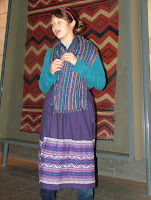
Right: Maya Weaver (in front of Southwestern Native American weaving in Native American Museum)


Left: Maya Scribe (using the stone in front of the Natural History Museum)


Right: Heir to Maya Throne describes plan for peace (sculpture garden)


Left: Spanish Conquistador (riding a horse on the carousel)


Wednesday, November 25, 2009

Students become characters from history


Montessori education aims to inspire in young people the idea that every human being is worthy of great repect and is capable of doing great things.

At the Farm School, Humanities Projects are driven by the attempt to get inside the perspective of individuals from different cultures in history. What was it like to be a Roman architect? What did it feel like to be the heir of a Mayan king? What if you didn't want to be the next king? What did Elizabeth Cady Stanton struggle with as she helped women win the right to vote?

Students write traditional research papers on an aspect of the culture we are studying; then they write a Dramatis Persona, a fictitious (although grounded in facts from their research) first person account of a moment in that person's life.

By writing and speaking as these people from our past, young adolescents have the opportunity to explore what it feels like to be one of these people, and in turn, to think about what great things they will do in the world.

"Let us in education ever call the attention of children to the hosts of men and women who are hidden from the light of fame, so kindling a love of humanity...a reverent consciousness of its dignity and worth" - Dr. Maria Montessori